


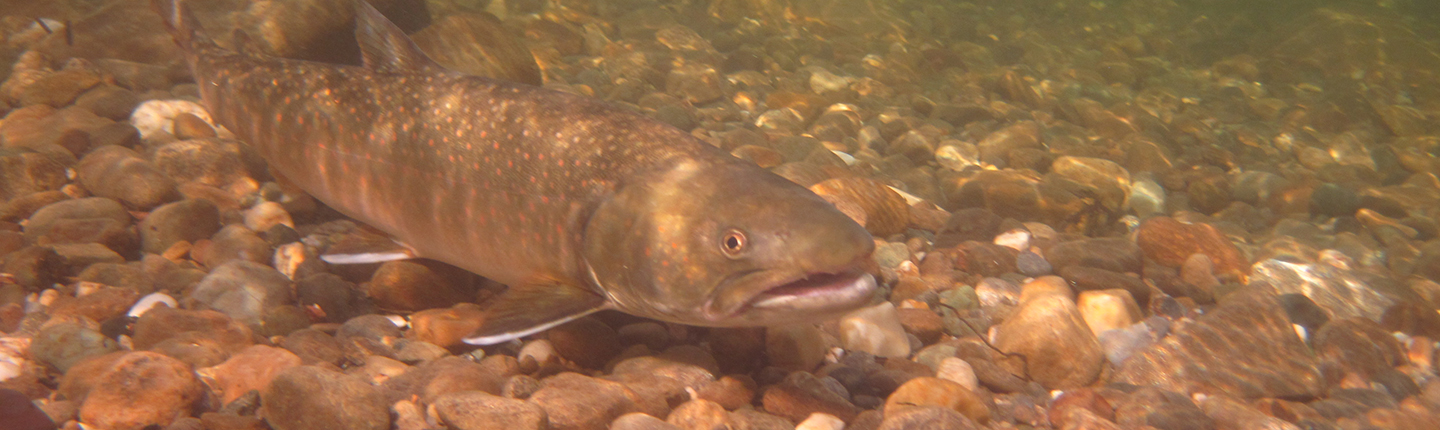
Peace Reach Bull Trout Habitat and Spawning Zones:
This project will use aerial and ground-based surveys to refine estimates of bull trout critical spawning habitat boundaries and adult spawner abundance in Peace Reach tributaries surveyed in 2016, 2017, and 2021: Carbon Creek, Clearwater Creek, the West Nabesche River, and Schooler Creek.
This project will address high-priority data gaps identified in the FWCP’s Bull Trout Information Synthesis and Monitoring Framework.
Executive Summary
Monitoring population status and trends of adfluvial Bull Trout in Peace Reach tributaries to Williston Reservoir is important and contributes to the ability to undertake conservation,management, and enhancement activities directed at Bull Trout. This objective aligns directly with First Priority Action Item PEA.RLR.S04.RI.13 Conduct research and monitoring of Bull Trout-P1 identified by the FWCP Peace Region Rivers, Lakes, &Reservoirs Action Plan (FWCP 2020).
Historic sampling data and anecdotal information suggested that sub-populations of largebodied adfluvial Bull Trout spawn in tributaries of the Peace Reach however only onecritical spawning zone had been identified prior to 2016. In 2016 and 2017, additional adfluvial Bull Trout spawning zones were confirmed through the enumeration of multiple redds during aerial and ground surveys.
On September 18 and 19, 2024, DES repeated aerial and ground surveys in selected locations and 44 Bull Trout redds were documented throughout the study area.
The results of the 2024 survey indicate that adfluvial Bull Trout use of Peace Reach tributaries is limited and exhibits a high degree of inter-annual variability in spawning activity. Factors such as significant crown closure over stream channels and limited safe helicopter landing sites renders certain sites difficult and less efficient to survey. A modest level of monitoring is required to build on the existing database in order to track long-term population trends in these Peace Reach tributaries. It is recommended that periodic monitoring (2 to 3 year cycle) be conducted on select sites.