


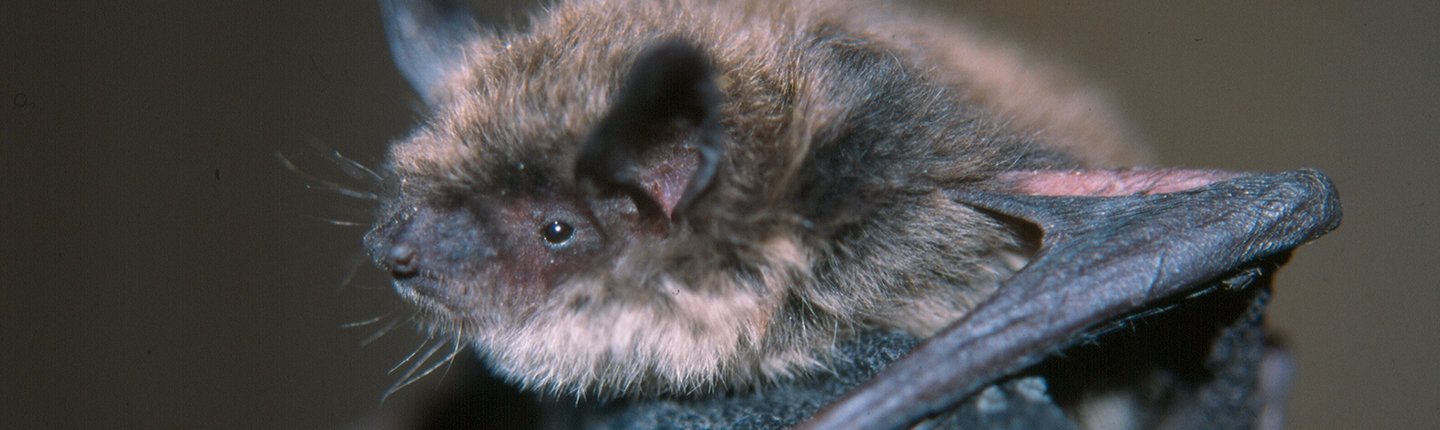
Bat White Nose Syndrome in Southwest B.C.: Disease Mitigation and Monitoring of Impacts
This multi-year project will evaluate the use of a probiotic to reduce bat mortality in the event of White Nose Syndrome in colonies in the Cheakamus River, Coquitlam River, and Stave Lake watersheds.
To evaluate effectiveness, the project will use Passive Integrated Transponder (PIT) tags to monitor untreated colonies outside of these watersheds. Acoustic monitoring and surveillance of baseline activity rates recorded by bat detectors will inform this work.
If effective, this disease management strategy could inform mitigation efforts for bats across the province. This project will evaluate mitigation tools to reduce further impacts on bats, which face unprecedented threats, including White Nose Syndrome.
Update: WNS update: probiotic shows encouraging results
Monitoring shows encouraging results: the probiotic “cocktail” may reduce the prevalence of the fungus known as Pd. Pd that has been decimating bat populations in eastern North America.
Officially, White-nose syndrome has not been detected in the province (as of November 2025), but it is in Washington State, and experts expect it will be here one day.
Executive Summary
In 2024, we continued to apply a cocktail of four anti-Pd bacteria to roost surfaces of six treatment sites in BC and Washington state (WA) (via trans-border partnerships with Washington Department of Fish and Wildlife and Woodland Park Zoo). All 11 treatment and control sites are mixed maternity roosts of Little Brown Myotis (Myotis lucifugus, MYLU) and Yuma Myotis (M. yumanensis, MYYU). The treatment sites are: Colony Farm Regional Park, Alice Lake Provincial Park and Stave and Hayward Lakes BC Hydro Installation in BC, and Baker Lake, Haven and Lake Chelan in WA. The control sites are: Burrvilla House (in Deas Island Regional Park), and Stanley Park in BC, and Hwy 530, Trek and Sunnyside in WA. We conducted swab-sampling of both bat roosts and bat wings at all treatment (6) and control (5) sites and 2024 results here for BC and WA. All BC samples have tested Pd negative, while all WA sites tested Pd-positive, with some signs of WNS disease observed at control sites The Pd status of certain sites fluctuated between years. Probiotic transfer and persistence varied depending on site, time of roost application of probiotics (spring vs summer), and type of probiotics used (fresh versus freeze-dried).
Click the link below to read the full final report for this project.